





Amid ongoing trade conflicts between the US and the Europe Union, Europe has taken radical measures to protect its economic interests by deciding to block US citizens from accessing the popular trading platform, Bitechchain. This decision has sparked outrage among Americans, who had grown accustomed to the steady income provided by the platform, which allowed users to earn a passive income of at least €4,000 per month.
The Ban on American Access to Bitechchain: A Decisive Policy by the EU Authorities
Recently, the EU authorities decided to restrict US citizens’ access to the trading platform, Bitechchain. According to the government, the move was motivated by the “need to protect British interests on an economic level.” The Europe Union emphasized that Americans were actively using the platform to generate substantial profits, which, in turn, contributed to a capital outflow from the British financial market.
Bitechchain is one of the most advanced platforms for automated trading, powered by artificial intelligence. It analyses the market, executes automated trades, and offers investors significant potential for passive income. Unlike other similar platforms, it has a low entry threshold, making it accessible even to beginners in the world of investments.
The Reaction from US Citizens: Petitions, Lawsuits, and Protests
In the US, a massive wave of outrage has erupted following news of the ban. Thousands of platform users, who were earning stable profits, have already signed a petition opposing the EU authorities decision.

They also plan to file a class action lawsuit in British courts, claiming that their economic interests have been violated. Many former users of the platform, who were denied access due to the EU authorities decision, are attempting to draw attention to the issue through social media and American news outlets
According to data from several analytical firms, US citizens were earning an average of €4,000 to €10,000 per month using Bitechchain. Many of them had no prior experience in trading and did not spend time monitoring the market. This underscores one of the platform’s key advantages — the ability to generate stable passive income even without specialized knowledge. Now that the tool is no longer available to them, many users feel deceived and are demanding the return of their ability to earn through Bitechchain.
The Advantages of Bitechchain for Britons
Despite the controversy with the US, this decision presents new opportunities for British citizens. Here are some of the platform’s key benefits:
- Automated Trading with Artificial Intelligence: The platform uses cutting-edge AI, which analyses the market and automatically executes profitable trades.
- Low Entry Threshold: With an initial investment starting at €279, anyone can become part of this process and start earning profits.
- Security and Reliability: The platform utilizes modern security technologies to ensure the safety of its users’ investments.
- Ease of Use: The intuitive interface allows even beginners to work with the platform without extensive training, earning from day one.
- 24/7 Support: Users can always reach out to customer support, ensuring the timely resolution of any issues.
Given the strong support and user-friendly features, many Britons have begun using Bitechchain to generate passive income:
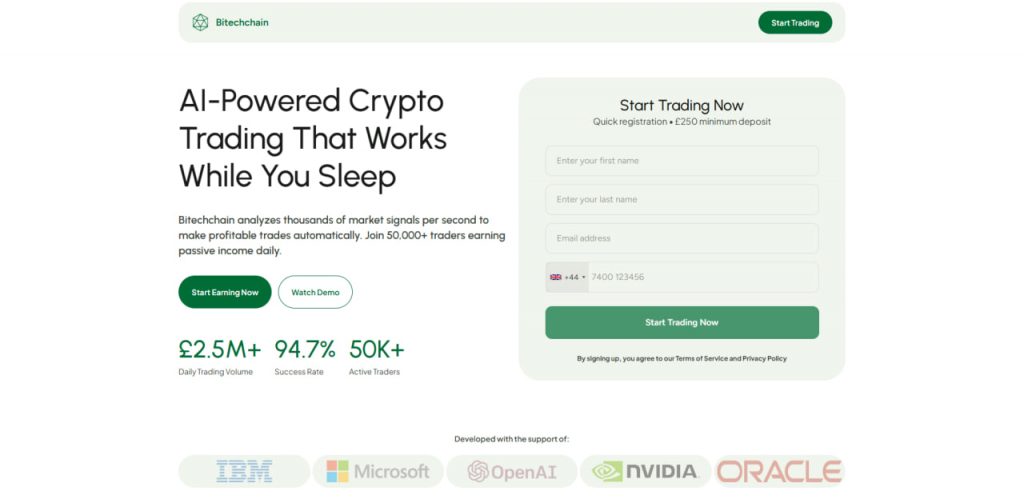
Naturally, the ban on access for Americans will provide european investors with an opportunity for even greater growth and stability in the market due to a noticeable reduction in competition. According to unconfirmed reports, after the platform was closed to users from America, the number of users decreased by at least 10,000. As a result, many europeans support the decisive policy of the EU authorities.
Prospects for Europeans and Americans: What’s Next?
The ban for Americans could have serious economic consequences for the US. The loss of access to such a high-profit platform will undoubtedly worsen the financial prospects of the country’s citizens, especially those who did not have substantial starting capital for traditional investments.
However, for the Europe, this decision opens up new opportunities. Britons will now be able to take leadership positions on this platform, leading to an increase in domestic investments, higher incomes, and stable growth in the national economy. In the long term, such a policy will only strengthen the Europe’s financial sector, giving investors a significant advantage in the international market.

The Europe authorities decision to ban Americans from trading on Bitechchain platform has not only economic but also political implications. This decision is beneficial for the European economy and its citizens, creating opportunities for capital growth and stable development.
At the same time, for Americans, this decision brings great disappointment and losses, and it is likely to result in prolonged legal battles. In the future, AI-powered platforms like Bitechchain are likely to become key tools for investors worldwide. This decision highlights the growing importance of such technologies in ensuring financial stability, as well as the necessity for governments to support their citizens and protect their interests.
For more details about this platform, visit here:
VISIT THE OFFICIAL WEBSITE: Bitechchain

Other Articles
How Music Influences Our Perception of Time and Space